
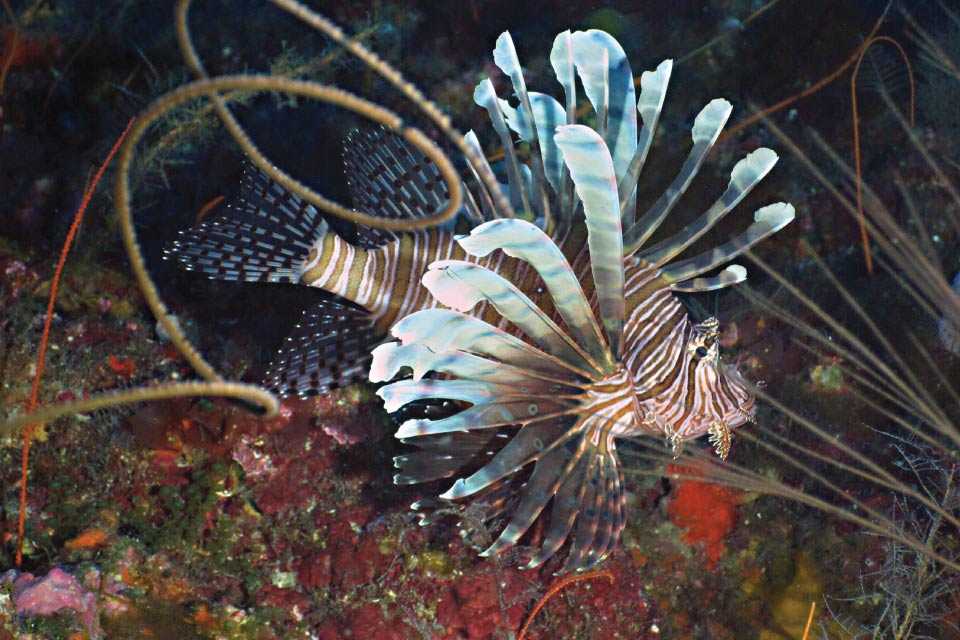

A lionfish can stop you in your tracks. Those striped fins look almost too elaborate to belong to a real animal. In Florida’s Atlantic waters, though, that striking fish is living where it does not belong.
There is encouraging news about the people tackling that problem. In its October 19, 2026 announcement, the Florida Fish and Wildlife Conservation Commission reported that participants removed 36,187 invasive lionfish during this year’s Lionfish Challenge, more than 5,000 above the 2025 total. That is a statewide result, not a count from Treasure Coast reefs.
How did lionfish arrive in Florida?
Lionfish belong naturally in the Indo Pacific region. NOAA identifies aquarium releases as the likely route into Atlantic waters, although the exact original introduction is uncertain. A beautiful aquarium fish can become a serious problem when released into an ecosystem that has not evolved alongside it.
The fish are doing what fish do: finding food, shelter and places to reproduce. The trouble is the extra pressure they place on native wildlife.
Why a hungry fish can change a reef
Lionfish eat small fish and crustaceans, including young snapper and grouper. They also compete with native predators for food. NOAA explains another connection: when lionfish consume fish that graze on algae, reefs can lose some of the animals that help keep algal growth in check. That can add stress to corals already facing other challenges.
Their reproduction makes control demanding. FWC reports that a female can release as many as 30,000 eggs every four days. Removing lionfish reduces the number of invasive predators feeding in an area. It does not mean the invasion has ended or that a reef has recovered. Continued work matters.
Why this matters on the Treasure Coast
Think of a child learning to fish in Sebastian, a family planning a Vero Beach vacation, a boat leaving Fort Pierce or a Stuart neighbor who knows the tide by heart. Marine habitats are part of our recreation, livelihoods and everyday conversations. Healthy fish populations help sustain the fishing traditions and wildlife encounters that bring people to this coast.
Near Stuart, Martin County describes St. Lucie Reef as a habitat shared by corals, fish, algae, invertebrates and sea turtles. Its mix of temperate and tropical life is a reminder that our underwater neighborhoods are varied. The Treasure Coast is not one continuous stretch of identical coral reef.
The people behind the progress
The Challenge brings recreational divers and commercial harvesters into an organized removal effort. FWC provides the program and checkpoints help document catches. Alongside that work, the Reef Environmental Education Foundation offers lionfish education, collecting and handling workshops, derbies and a way to report sightings for research.
Thank you to the divers doing demanding work underwater, the researchers asking careful questions, and the organizers and volunteers helping people learn and participate. A statewide number begins with many individual hours of effort.
Five lionfish facts worth sharing
These details come from FWC’s lionfish species profile:
1. Florida’s first reported Atlantic sighting was near Dania Beach in 1985. This is a long running conservation challenge.
2. Lionfish can mature in less than a year. New generations can begin reproducing quickly.
3. Females release eggs in two jellylike masses. Those floating masses help eggs travel with the water.
4. They have 18 venomous spines. The spines serve as a defense and can cause painful injuries.
5. Those broad, feathery side fins are not the venomous ones. The venomous spines are on the dorsal, pelvic and anal fins. That distinction is for learning, not an invitation to handle one.
You can help without diving
Never release aquarium animals into waterways. Share accurate identification information, and use REEF’s sighting reporting resources if you have a genuine observation. You can also follow its educational programs or ask an organizer about suitable volunteer roles.
Closer to shore, pick up ordinary litter safely, keep fishing line out of the water and leave coral and living marine animals undisturbed. These are among Martin County’s practical reef conservation suggestions. They support coastal habitats even though they do not directly remove lionfish.
Untrained residents should never attempt to catch, touch or handle a lionfish, including a dead one. Leave removal and handling to people with appropriate training and equipment.
If this has you curious about more of our coastal neighbors, read our Indian River County sea turtle Spotlight. It is another good story to share with someone who loves living here.
